Walkers and fell runners
I won't just tell you to stop.
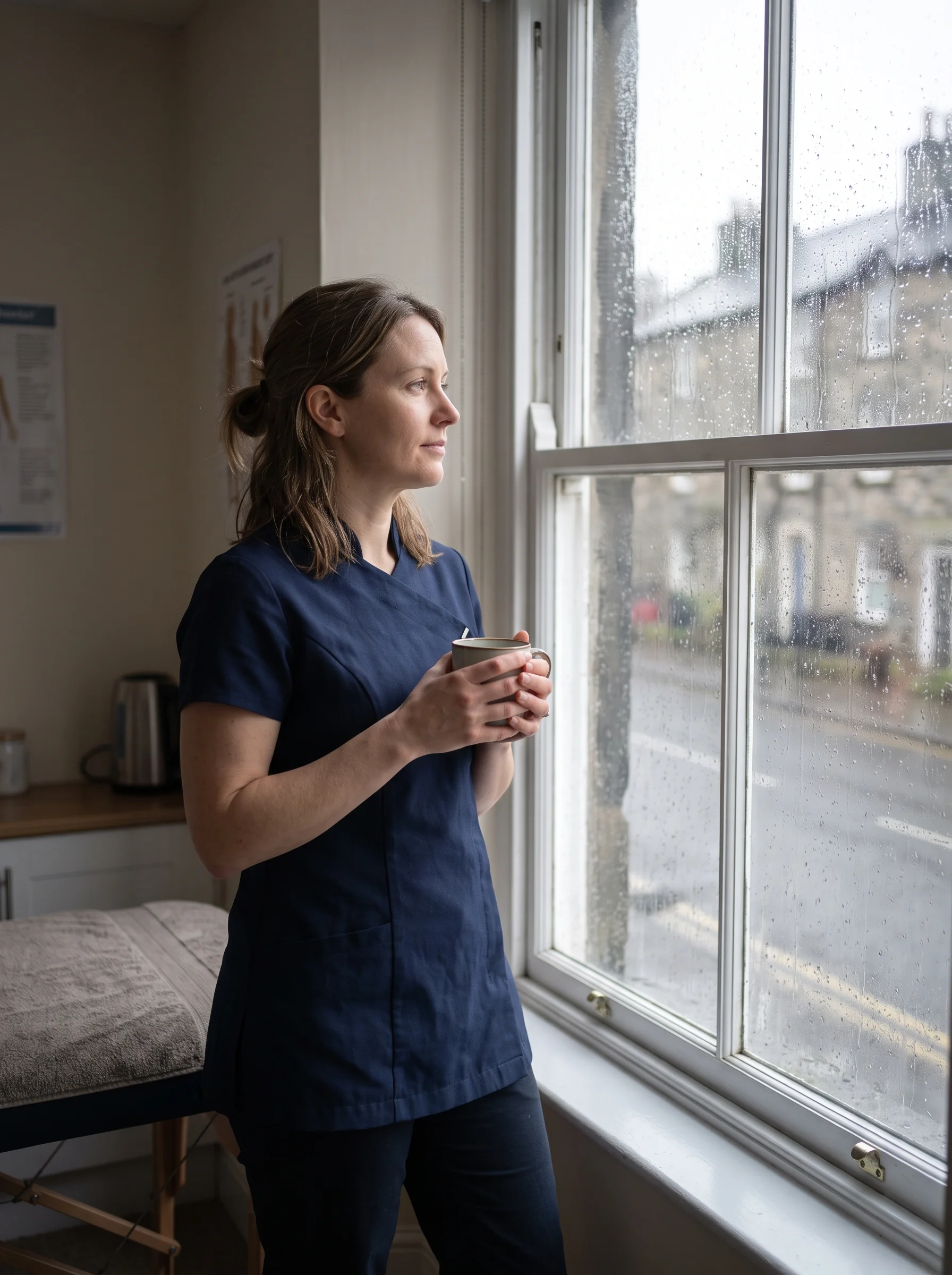
Helen
Physiotherapist. Knees, hips, ankles, walkers and fell runners.
“I run on the fells myself, so I know what you're afraid I'll say.”
Most people who come to me with a running or walking injury have been putting it off for weeks, and the reason is nearly always the same. They're expecting to be told to rest for six weeks and take up swimming. I'm not going to say that. Rest on its own rarely fixes what the fells do to knees, ankles and tendons, and it takes away the thing you were doing it all for.
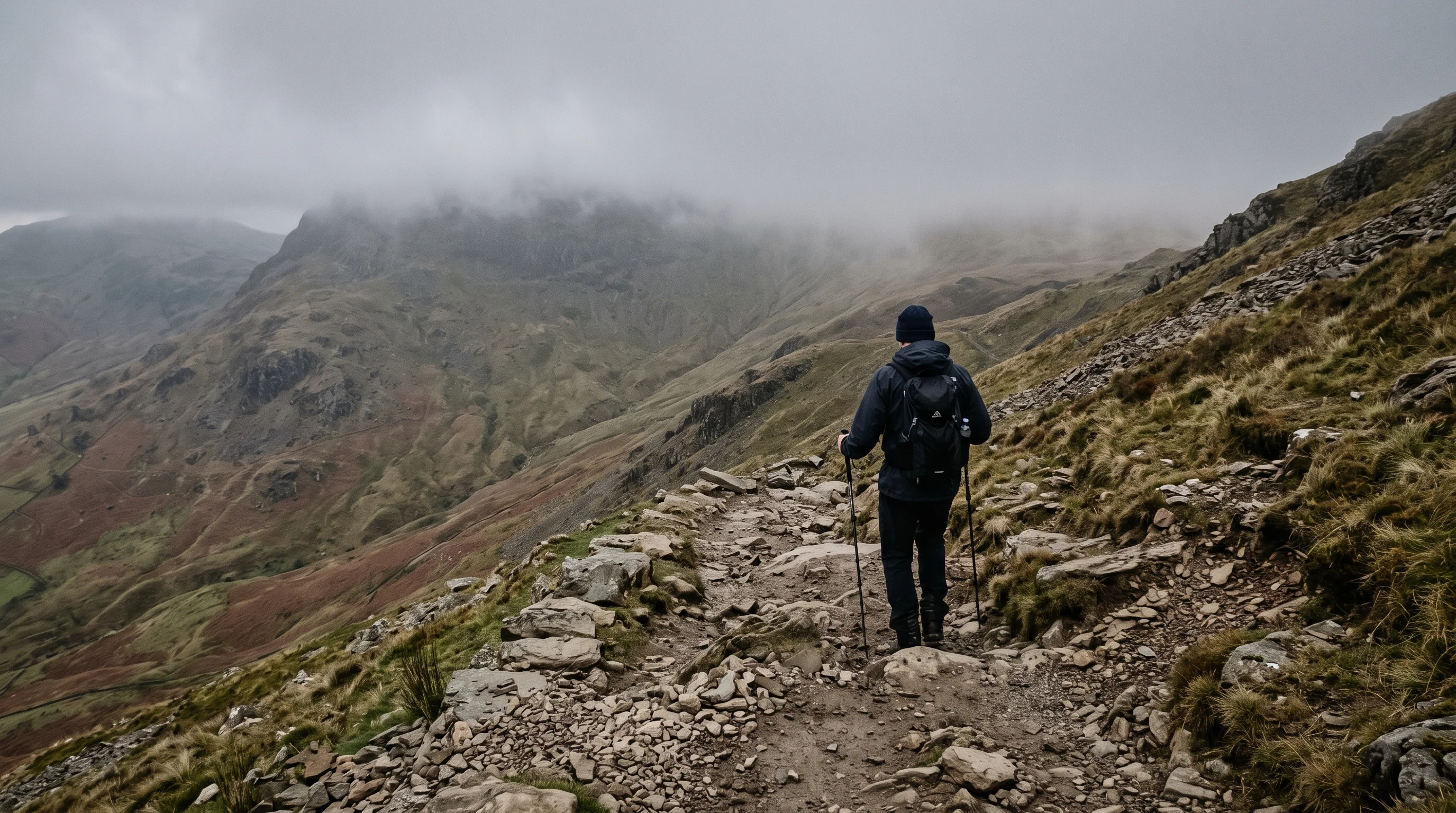
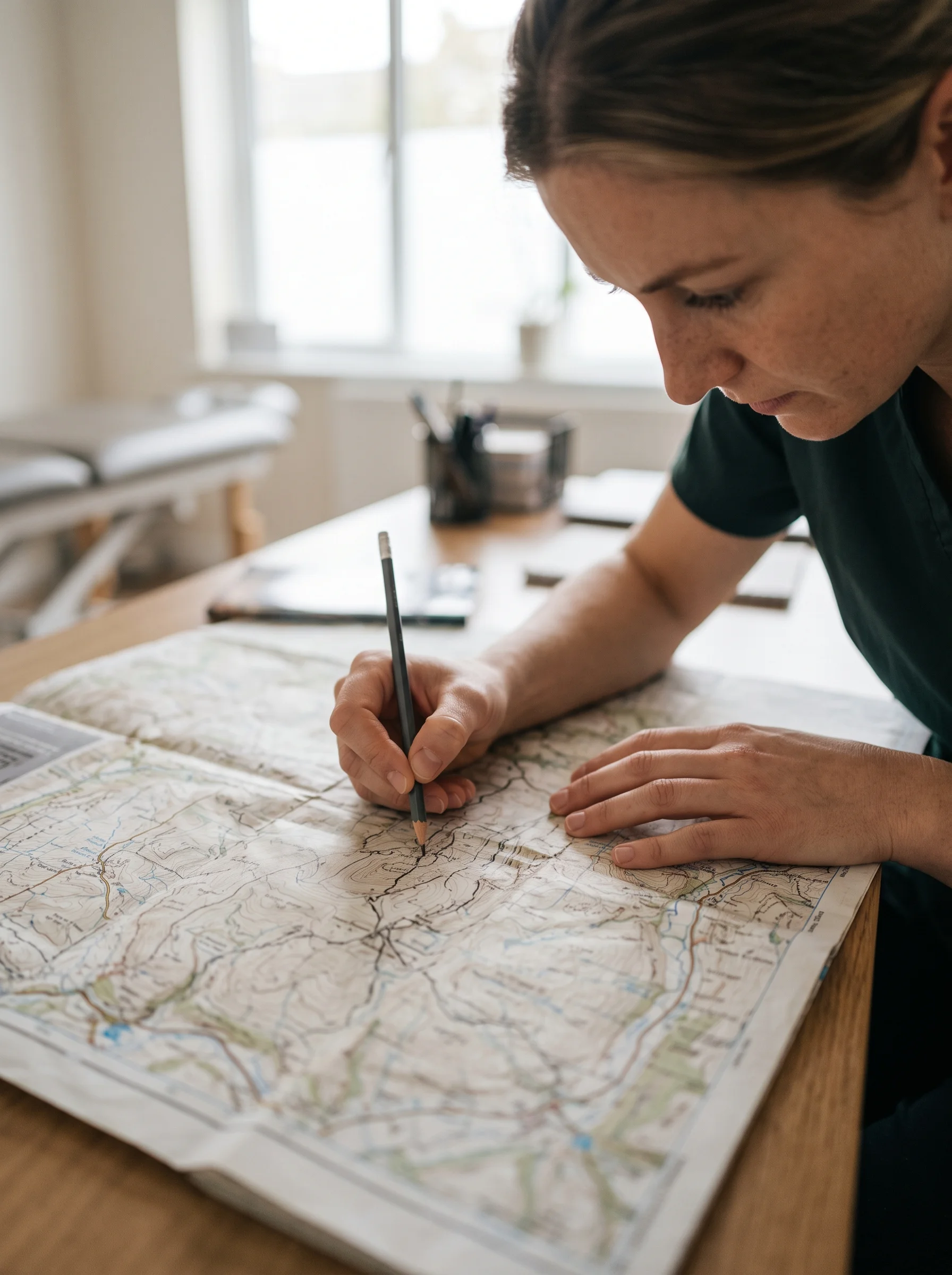
So before I look at the sore bit, I'll ask about the hill. Which routes, how often, how steep, what the ground was like when it started, and whether you were going up or coming down. Then I'll ask what you're trying to get back to. A Wednesday night club run. The Kentmere round before the clocks change. Walking the dog up Scout Scar without thinking about your knee. That is what the plan is built around.
If something is torn or broken rather than overworked, I'll tell you plainly and send you to the right person at the first appointment. For everything else, you keep moving as much as the injury allows while it's put right.
If you've read enough already, you can book an assessment with me further down this page. The assessment is £68 and you don't need a GP letter.
Helen
“Tell me the route and I'll usually guess which bit of you hurts.”
The injuries the hills bring in
These are the ones I see most often in walkers and fell runners around Kendal and the South Lakes. If yours isn't here it is still worth coming in, because the way I work it out is the same whatever it turns out to be.
- Knees that hurt coming down
- Going downhill, the muscles at the front of your thigh work as brakes, lengthening under your weight with every step. A long or steep descent asks far more of them than the climb did, and the pain usually arrives at the front of the knee or just below it, often the day after. In most of the knees I see it is the brakes complaining, not the joint wearing out, and I'll tell you which once I've watched you step down.
- Achilles and calves
- Steep climbs, big step-ups and long days on your toes load the Achilles tendon and the calf above it. The pattern is familiar: stiff first thing in the morning, eases as you warm up, then nags on the drive home. Stopping completely tends to leave the tendon weaker rather than better. The fix is usually getting the load right, not removing it.
- Ankles that keep going over
- Once an ankle has been sprained on rough ground it is more likely to go again, partly because the ligament is a little looser and partly because the ankle has stopped reacting as quickly as it used to. That reaction can be trained back. Tussocks, bog and wet rock are exactly where it matters.
- Hips and the outside of the knee
- A deep ache at the side of the hip after long miles, or a sharp pain on the outside of the knee that turns up at the same point on every run, usually comes from the muscles round the hip tiring and the leg dropping inwards a little with each stride. You can't see it happening yourself. I can, when I watch you walk and hop.
- Shins and heels
- Shin pain on hard tracks after a block of fell running, or pain under the heel with the first steps out of bed, both tend to appear when the miles have gone up faster than the body has had time to adapt. They are overuse problems, and overuse problems respond to changing the dose, not stopping altogether.
How I work out what's actually wrong
I'll ask about the route, the miles, the shoes and when it started. Then I'll watch you walk, step down, hop and stand on one leg, and I'll feel the sore area and the parts around it. After that I'll tell you what I think is going on in words you could repeat to a running partner on the way up the hill.
If I think it needs a doctor or a scan, I'll say so at this first appointment rather than let you come back three times first.
Getting you back out
Helen on how the plan runs, from the first appointment to the first real descent.
-
This week
You leave knowing what you can still do
Two or three things to do at home, written down, and a straight answer about what to keep doing. For most people that is walking on the flat, or shorter runs that leave out the steepest descents for now, rather than nothing at all.
-
The next few weeks
The strength the hill is asking for
Braking strength in the thighs for the way down, spring in the calf for the way up, quicker reactions in the ankle for rough ground. The terrain goes back in stages, flat then gentle then rough then steep, and you'll know what each stage is for before you do it.
-
Back on the hill
Testing it on a real descent
When you take it onto a proper fell, you'll know what to pay attention to and what is just a tired leg. If something flares, you'll know what to do that evening, and you'll know whose name to ask for at the follow-up. It will be mine.
The aim, in one line
You, back on the South Lakes paths, knowing what went wrong, what you changed, and how to tell if it's starting again.
Keeping it from coming back
Once the injury has settled, what stops it returning is usually strength and control rather than more rest. There is a small clinical Pilates studio here in Kendal, on the ground floor like everything else. For most of the week it is Jo's, full of people getting used to a new hip or knee.
I take walkers and runners in there for a handful of sessions once they're out of pain: single-leg strength, balance on an unsteady surface, slow controlled step-downs, the specific work a pair of fell legs needs. You'd see me, the person who treated you, not a class. When you've got it, you take it home and I let you go.
Jo describes the studio itself, and how it is used after surgery, on the new hip or knee page.
Helen
From people who walk and run here
4.9 out of 5 from 187 Google reviews, all three of us together.
-
“I came in certain Helen would tell me to stop running until Christmas. Instead she asked which descents hurt, watched me hop, and had me back on the flat the same week with three exercises. My Achilles has been fine since the spring.”
Saw
Helen
-
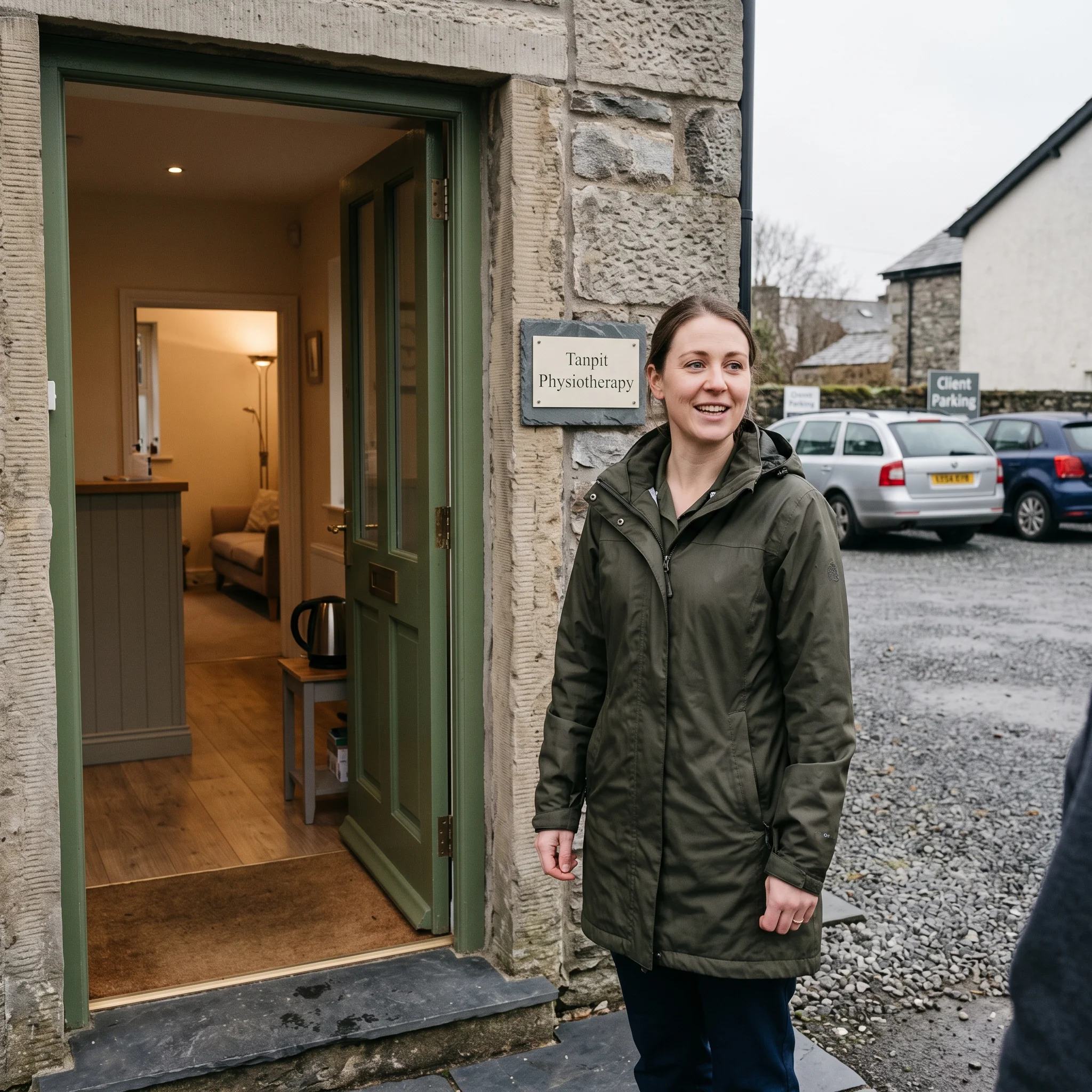
“Walking down off Red Screes had become something I dreaded. Helen explained what my knee was doing in two minutes with a pencil drawing and told me exactly what to strengthen. I did the Fairfield horseshoe in August without thinking about it once.”
Saw
Helen
-
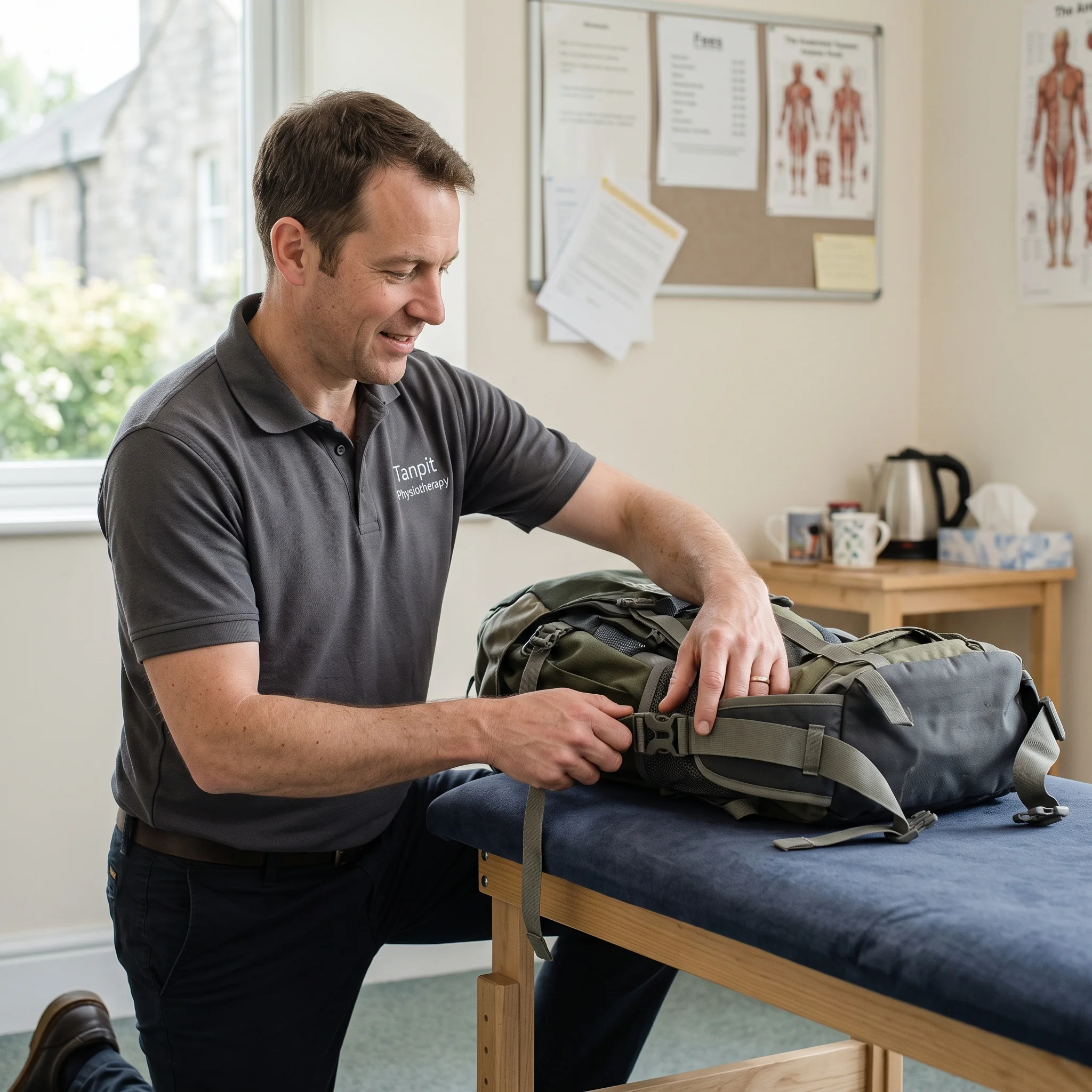
“My back went on the second day of a long walk with a heavy pack. Sam settled the immediate pain, then spent the rest of the appointment asking how I was loading and carrying the rucksack. That turned out to be the real problem, and nobody had asked before.”
Saw
Sam
Book an assessment
Helen
Most of the walkers and runners I see are at work in the day, so Monday, Tuesday and Thursday run until 19:30 and Saturday morning is 08:30 to 12:30. Tell me what's hurting and what you're trying to get back to, and I'll reply to arrange a time.
If you'd rather see Sam or Jo, say so. Whoever you name will be the one who writes back. Not sure an assessment is the right step? Ask first; nobody minds.