Who you'll see
Working together since 2016
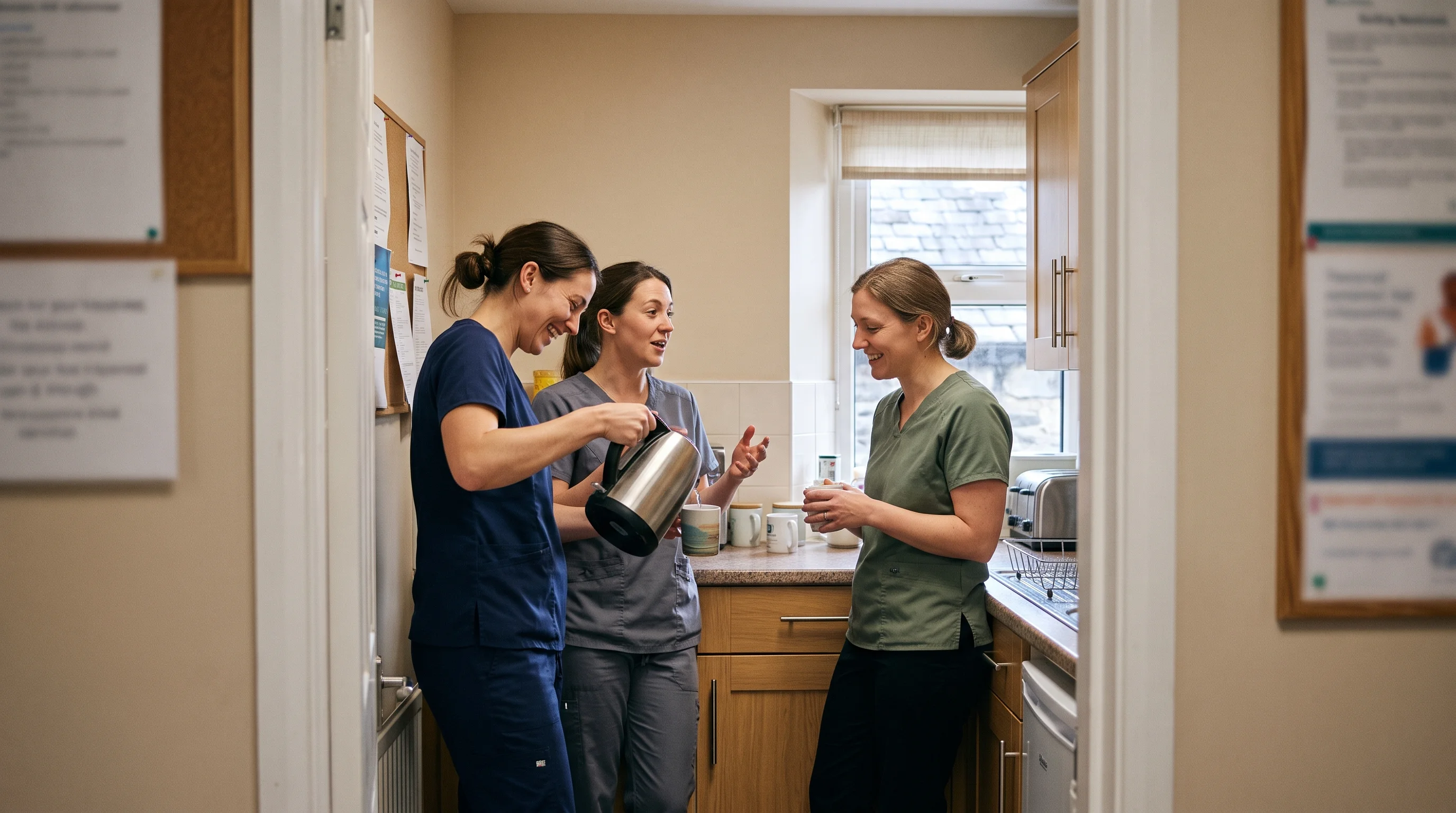
Sam, Jo and Helen here. There are three of us, there have only ever been three of us, and we've shared these ground-floor rooms in Kendal since 2016.
That matters more than it sounds. We cover for one another when someone is away, so you're never handed to a stranger. We read each other's notes before you walk in, so you don't have to tell your story twice. And when one of us isn't sure, we ask one of the other two over the kettle, with your say-so, rather than guessing. Ten years of that is why people in Kendal tend to say the name of the person they saw rather than the name of the clinic.
Each of us, in our own words
How each of us tends to start an appointment, what we see most, and when we're in. Read all three or just the one you've already got a feeling about. Either is fine.
-
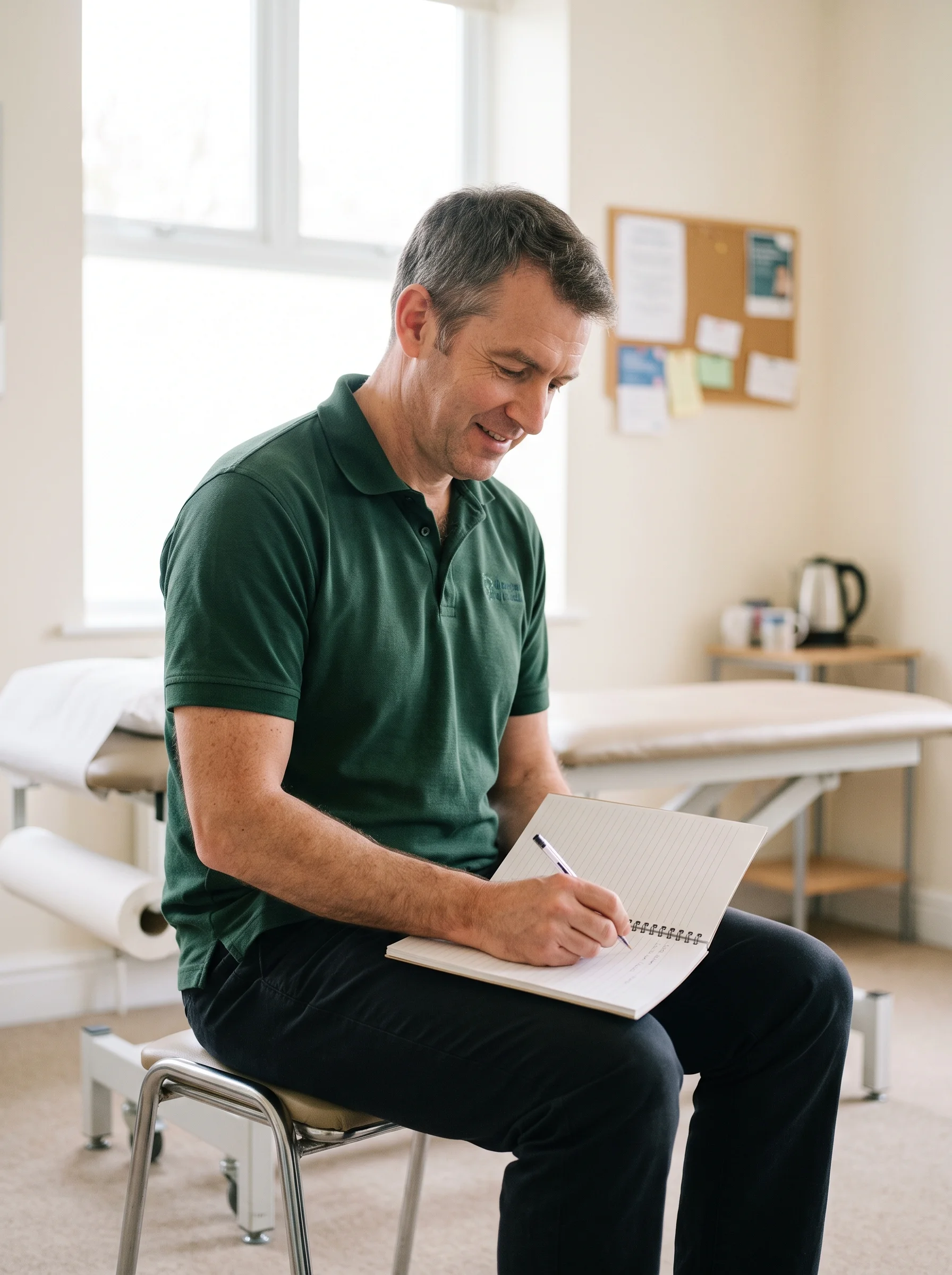
Sam's room, the first door on the left from the car park. Sam
“I'll ask you first what you're worried about, before I ask where it hurts.”
How I start
Most people arrive with a theory about what's wrong, and quite often the theory is keeping them awake more than the pain is. So I ask for it straight away. Then I ask what you've stopped doing because of this, because that's what we're actually trying to get back.
What I see most
Backs and necks, then shoulders and elbows. People who have stopped lifting the grandchildren, stopped turning to reverse the car, stopped sleeping on one side. A lot of neck pain that started at a desk and a lot of back pain that started in the garden.
When I'm in
Most weekdays. The late evenings on Monday and Thursday, up to 19:30, are usually mine, for people who can't get away from work before six.
Read what I do with backs and necks and shoulders and elbows.
-
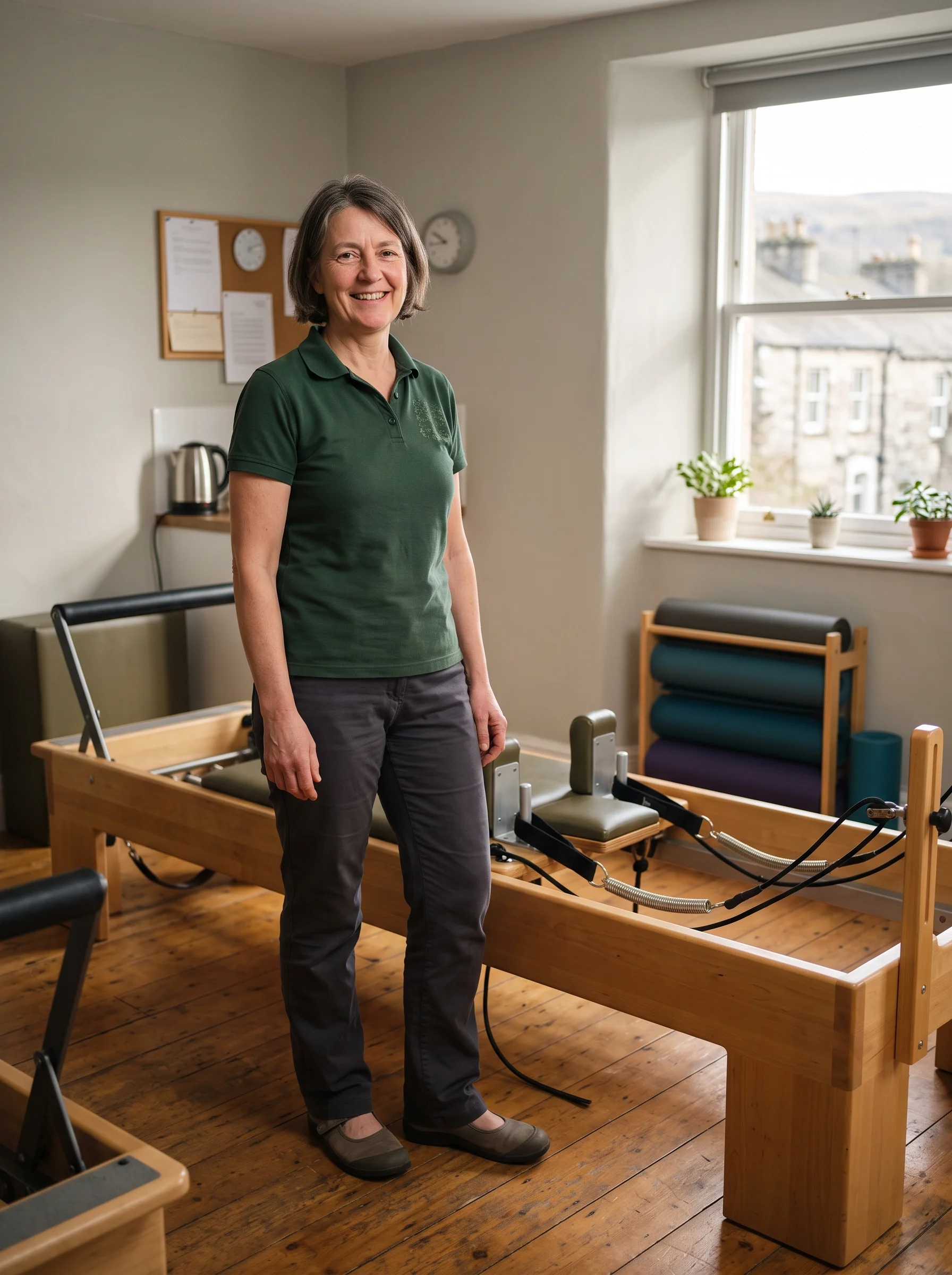
The studio. Small on purpose: two people, never a class of twenty, showing a physiotherapist standing by the reformer. Jo
“Most of my week is people with a new hip or knee. The first walk round the car park is the bit I like best.”
How I start
With a cup of tea if you want one, and by watching how you got from the car to the chair. That walk tells me more than the operation notes do. Then I ask what the hospital told you, because it's usually a lot, said quickly, on the day you were least able to take it in.
What I see most
New hips and knees, from the first week home onwards. Hip replacement physiotherapy across the South Lakes takes me out of the clinic for home visits when someone can't get to us yet. Once people are steady, I move them into the small studio for clinical Pilates, two of us and a reformer, so the new joint learns to trust itself.
When I'm in
Tuesday to Saturday morning in the clinic. Monday is usually my home-visit day around Kendal and Windermere, so if you need me to come to you, that's when I most often can.
Read how I work after a new hip or knee, including if you can't get to us yet.
-
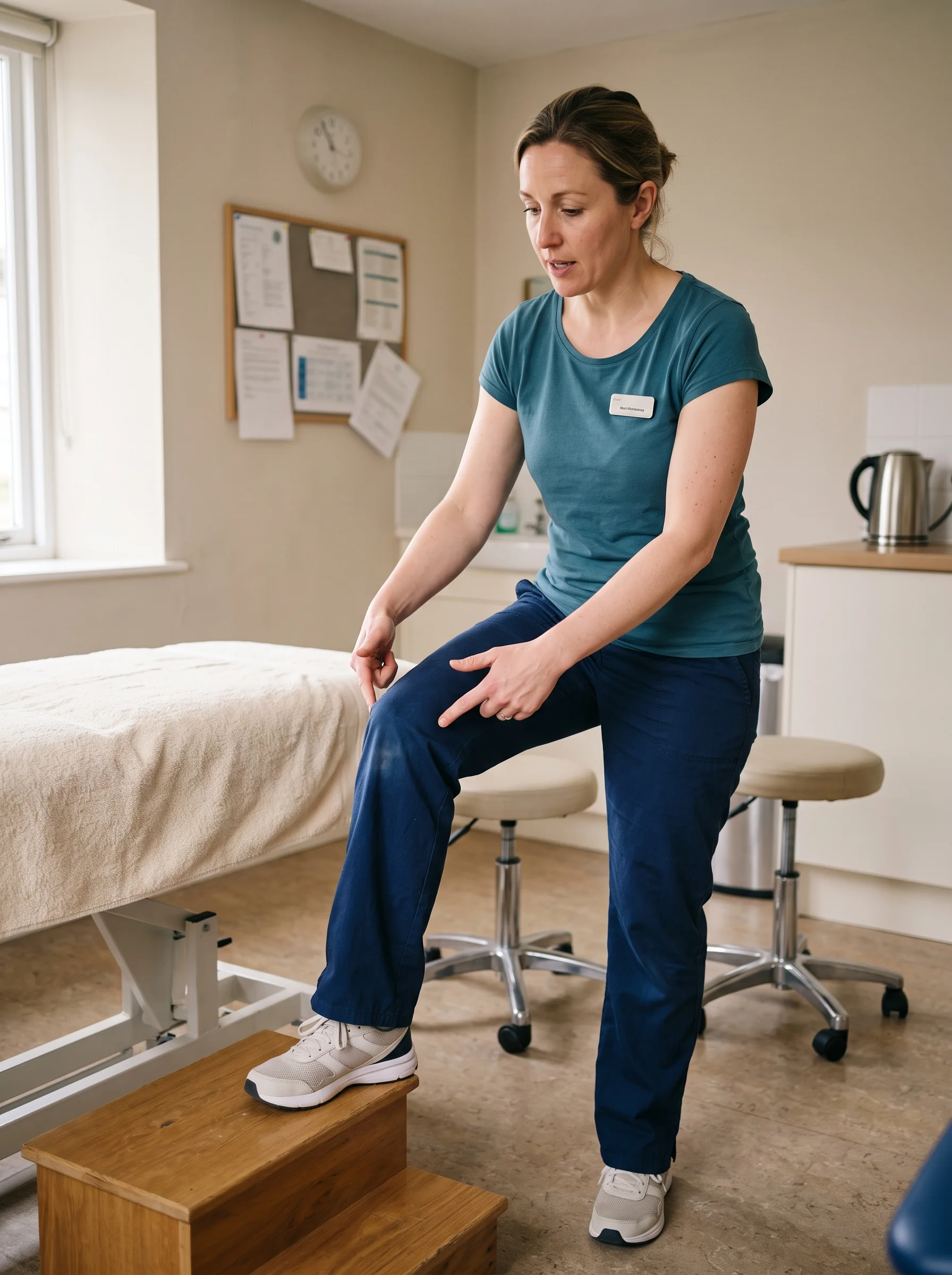
Helen's room. The step is for watching knees, not for decoration. Helen
“I run on the fells myself, so I won't just tell you to stop.”
How I start
I'll watch you walk before I touch anything. Then I'll ask what you were doing when it started: which path, which descent, how far in, how long you'd been building up to it. The answer usually points at the problem before my hands do.
What I see most
Knees, hips and ankles, and the heels and shins that walkers and fell runners bring down off the hills. The knee that won't take a descent, the ankle that keeps going over, the heel that's fine until the first ten minutes of a morning. I'm the fell running physio in the Lake District who'd rather change how you run than stop you.
When I'm in
Wednesday to Saturday. Saturday morning, 08:30 to 12:30, is usually mine, because that's when people come in straight off the fells with something to show me.
Read how I work with walkers and fell runners and with knees, hips and ankles.
Patients on each of us
Between the three of us, 4.9 out of 5 from 187 Google reviews. Most of them name the person rather than the clinic, so that's how they're sorted here. Nothing has been tidied up.
-
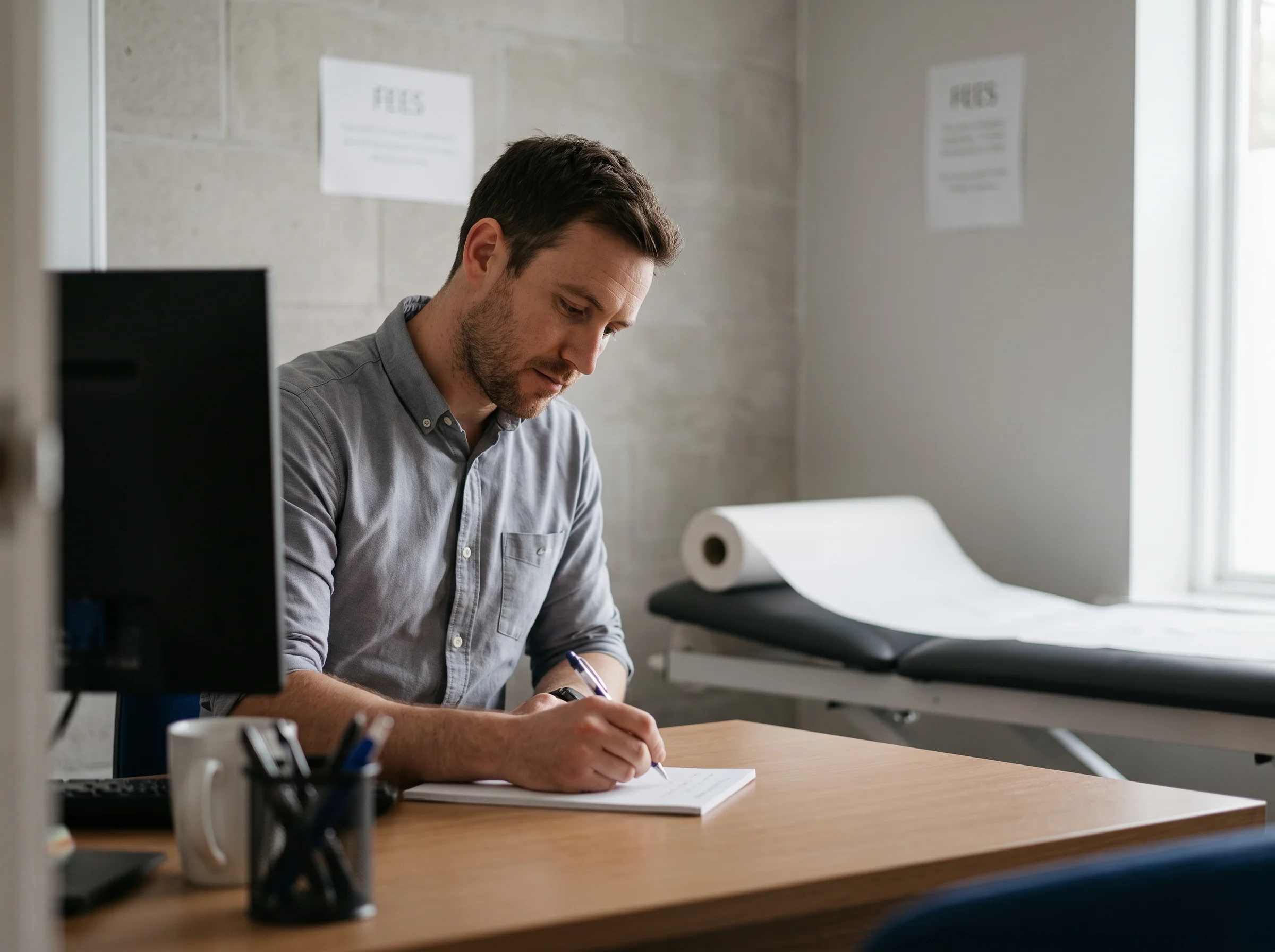
Sam
“I went in convinced I had a slipped disc. Sam listened to the whole worry, examined me, and then explained why it wasn't that. I slept properly for the first time in a month that night.”
“Sam wrote down three exercises and what each one was for. Not a sheet of twenty. Three, and I actually did them.”
“My neck has been bad on and off for years. Sam is the first person who asked what I do at my desk all day and then showed me, on himself, what my shoulders were doing.”
-
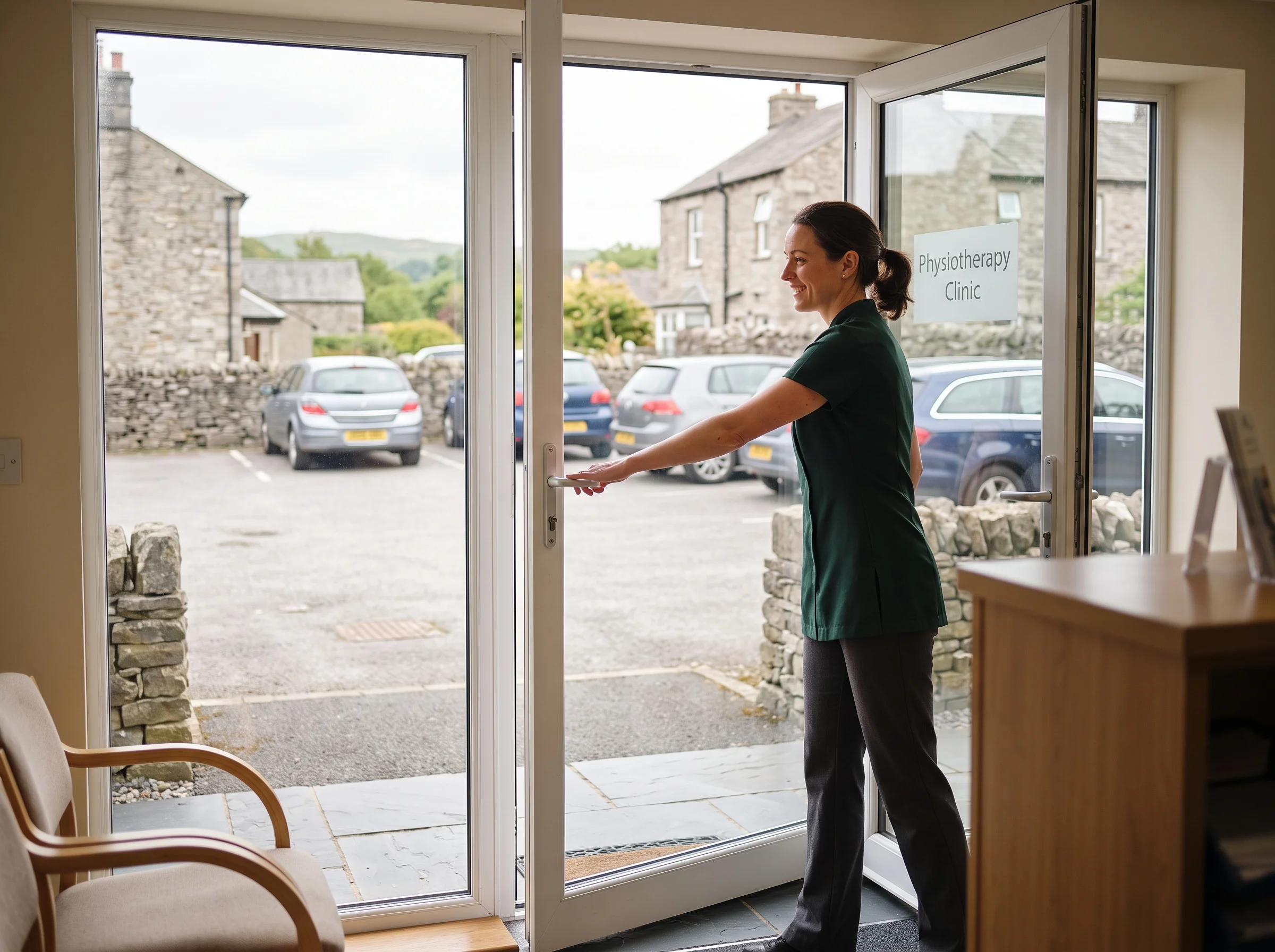
Jo
“Jo met me at the door with the crutches and walked me in from the car. No step. I'd been worrying about the step for a week.”
“Twelve weeks after my hip, Jo had me in the little studio on the reformer. I was nervous. She was so matter of fact about it that I forgot to be.”
“Jo saw my mother at home for the first month after her knee. She rang me afterwards each time to say what they'd done. That's not something you can put a price on, though the price was plain enough.”
-
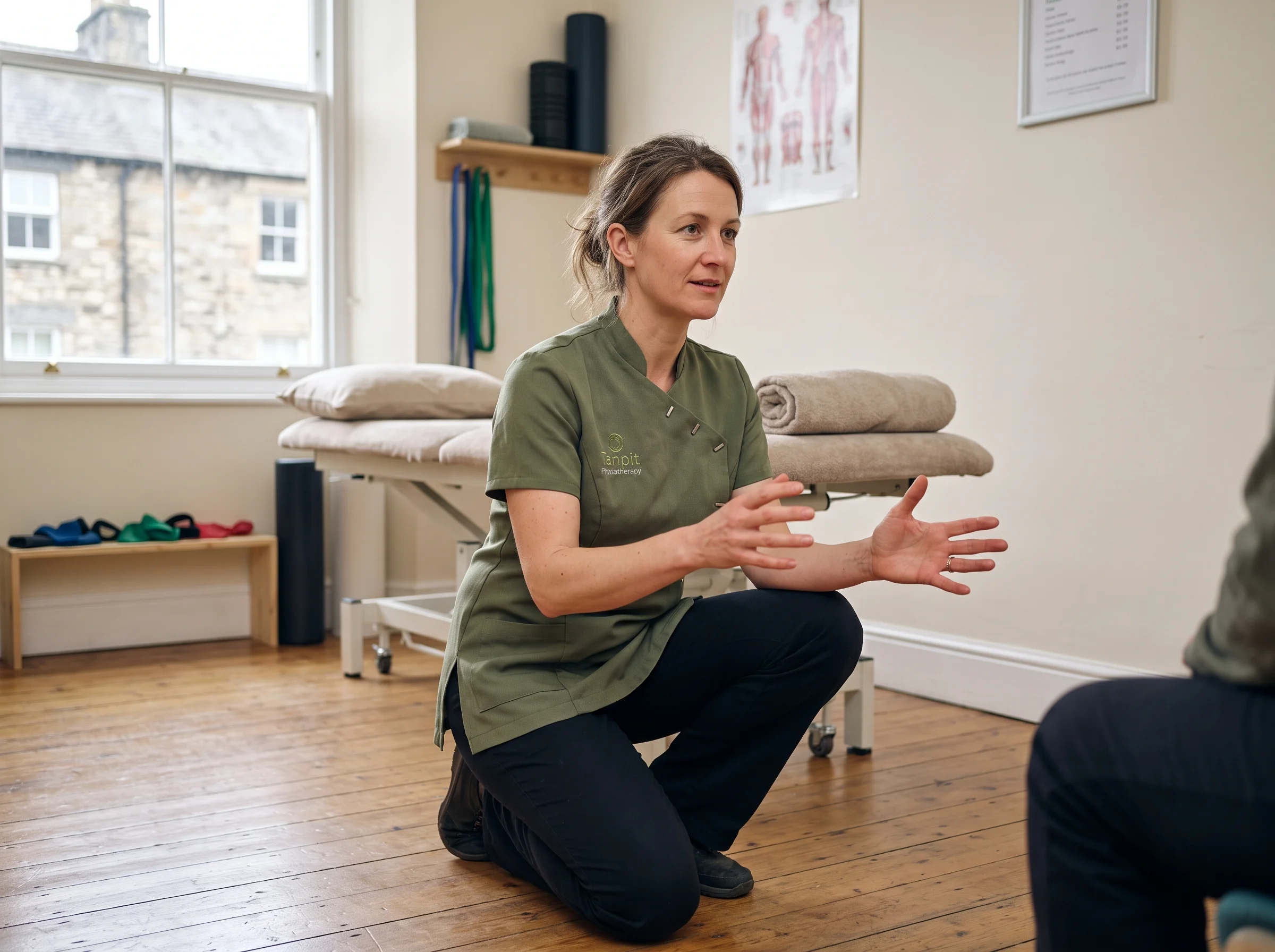
Helen
“Helen asked which descent it was. Not 'do you run', which descent. She knew the path. That was when I relaxed.”
“I'm seventy-one and I walk every day. Helen never once suggested I should do less of it. She changed my shoes and my stride and the ankle has stopped going.”
“Had me walk up and down the room four times before she said a word. Then she told me exactly what my knee was doing on the step, in plain English, and what to do about it.”
Book with one of us
If one of us sounded right, say so. The booking form asks who you'd like to see, and that's the person who replies to you and the person you'll see on the day.
- Book with SamBacks, necks, shoulders, elbows
- Book with JoNew hips and knees, home visits
- Book with HelenKnees, ankles, walkers, runners
Or ask for whoever is free soonest. You'll be told the name before anything is confirmed.